
Announcing RHNH’s Key Communities Project
Reaching Higher NH is proud to launch the Key Communities Project, a statewide partnership designed to ensure that local experience directly informs education policy decisions made in Concord.
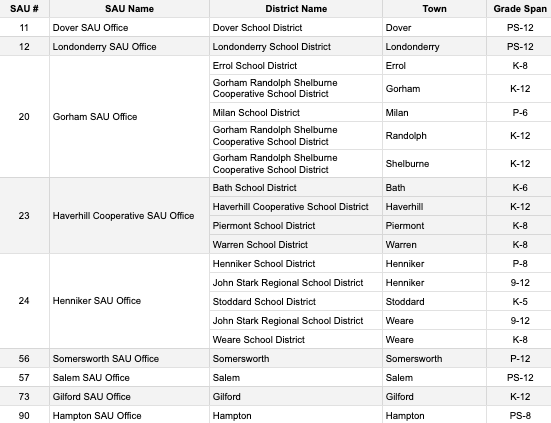
This initiative brings together 10 School Administrative Units (SAUs) representing 21 towns and cities across New Hampshire. Together, these communities reflect the geographic and demographic diversity of our state — rural, suburban, and urban — and will serve as a sustained source of insight, experience, and leadership in statewide education conversations.
Why This Matters:
Public education policy should be shaped by the people who experience and strengthen it every day. Students, educators, families, and local leaders bring insight, expertise, and lived experience that are essential to building responsive and forward-looking education systems. Yet too often, the insight and expertise present in local communities is not fully elevated within statewide policy conversations.
The Key Communities Project strengthens the role of citizen voice in shaping policy. It creates a structured, ongoing partnership that elevates community-based insight, aligns it with evidence, and ensures that decisions made in Concord are informed by those most directly impacted.
As Nicole Heimarck, Executive Director of Reaching Higher NH, explains:
“Strong public policy begins with listening. The Key Communities Project ensures that local voice is not occasional or symbolic, but central to how education decisions are shaped in our state. When lived experience and evidence work together, we build smarter, more responsive policy — and a stronger public education system for all.”
By working closely with key communities, RHNH can move beyond abstract policy debates and spotlight what truly matters: the well-being and success of New Hampshire’s youth and families.
A Foundation for the Work Ahead
The Key Communities Project is designed to endure beyond a single legislative session. It strengthens civic participation, deepens trust between local communities and statewide leaders, and contributes to a co-constructed vision for public education in New Hampshire.
When citizen voice is consistently embedded in policy conversations, public education becomes more responsive, more equitable, and more sustainable. We are grateful to each participating SAU and community for their leadership and partnership - and we look forward to sharing more about this work in the months ahead.