
Welcoming the 2026 legislative session
January 12th, 2026
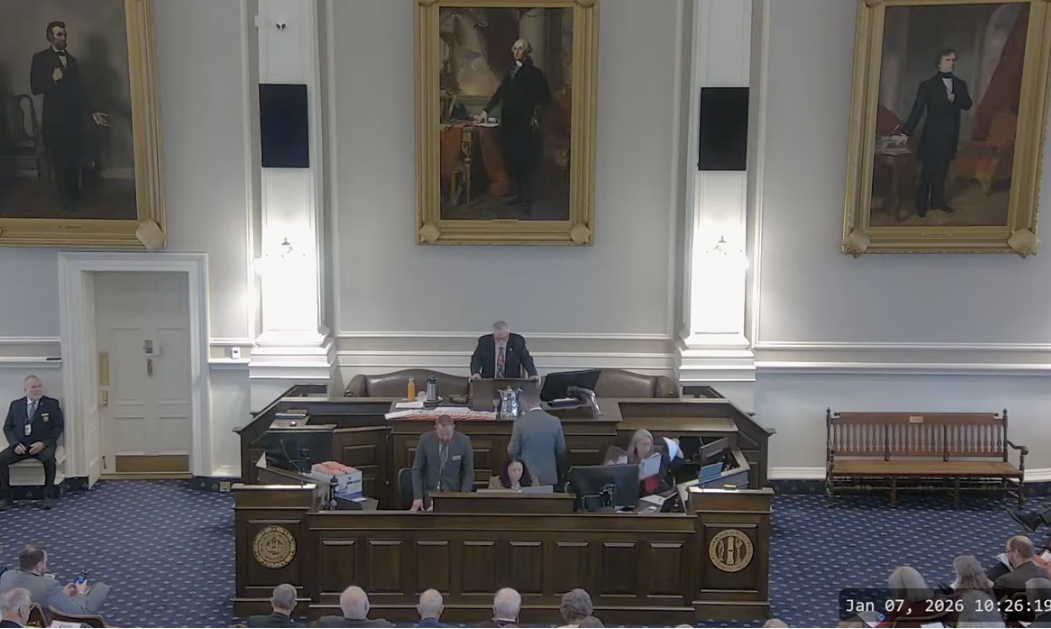
Last week, NH state legislators returned to Concord to vote on a number of bills held over from last year. It was a frenzy of activity at times, with a couple of surprising votes, and a preview of the debates that are to come.
What passed
Open enrollment
SB 101: authorizing parents to enroll their children in any public school in the state.
>> The Senate Education Committee had recommended a vote of Inexpedient to Legislate on this bill that creates a statewide open enrollment system, but in the wake of this fall’s lawsuit, which determined that schools can be on the hook for open enrollment costs even if they have not voted to become open enrollment schools, some legislators believe this bill is more urgent than before. SB 101 would effectively make every school an open enrollment school, and would make some changes to the amounts districts are asked to pay when their students attend school elsewhere. The Senate ultimately voted Ought to Pass, and this bill will now go to the Senate Finance Committee, where Sen. Lang is expected to introduce an amendment.
To learn more about open enrollment, visit our website and watch our recent webinar.
School district audits
HB 121: relative to school district financial requirements and district probation processes
>> One of the bills that was updated with a non-germane amendment this fall, HB 121 is effectively a response to the funding crisis in Claremont. This bill creates stricter audit requirements for school districts and introduces a fine for noncompliance. It also creates a probation process, functionally allowing the Department of Education to take over a district’s operations. The bill passed the House essentially along party lines, with only 2 democrats voting in favor and no Republicans voting opposed. The bill will still need to go through the Senate.
A full list of other bills that passed their respective chamber and will continue to move through the legislative process can be found here.
What didn’t pass
School district spending caps
HB 675: limiting total central office administrative expenses by school districts and requiring reporting of central office administrative expenses to the department of education
>> This bill came to the House floor as a bill to mandate school district spending caps, despite the fact that communities regularly vote down spending caps.Two floor amendments changed the terms of the debate. One amendment added a cap on administrative spending to the overall spending cap, while a second replaced the overall spending cap with a cap on administrative spending. The second amendment was adopted – resulting in the new title of the bill – but removing the overall spending cap left the bill unpalatable to Republican members of the House.
Ultimately, the bill failed 364-9, leaving local spending decisions in the hands of school boards and local voters.
Expanded free meals
SB 204: relative to the responsibility of local school districts to provide meals to students during school hours, reimbursing schools for meals provided to students at no cost, and making an appropriation therefor
>> This bill, which had passed the Senate, would have allowed school boards to vote to raise eligibility for free school meals to 200 percent of the federal poverty level. Districts that chose to expand free meal eligibility would be reimbursed by the state for a portion of expenses not covered under the federal school meal program. Research has shown that school meals are associated with a number of positive outcomes, including academic outcomes. Nevertheless, the House voted this bill down.
A handful of funding bills that would have made various changes and increases to different components of school funding. It is not a surprise to see these bills fail, and there will be a whole new set of funding bills for lawmakers to debate this spring (more on that below).
For a full list of bills that were voted inexpedient to legislate, tabled, or referred to interim study (effectively a death sentence in the second year of a biennium), click here.
What’s next
Now, legislators turn their attention to new bills proposed for the 2026 legislative session, along with amendments and follow-up to the floor votes last week. Late last year, RHNH previewed some of the themes arising from early legislative service requests. Based on bill text and conversation, RHNH will be tracking several key topics as we move through the session:
Vouchers:
As expected, there is significant interest among republican lawmakers in expanding voucher eligibility – including making vouchers available to everyone with no enrollment cap (SB 581) – and there is interest among democratic lawmakers in putting some guardrails around the program that cost the state $50m this year alone. Proposals from democrats call for more reporting, academic and fiscal accountability, and limits to voucher enrollment. Bills we’re watching most closely include:
-
SB 581: modifying education freedom account eligibility and removing priority guidelines and the enrollment cap relative to EFA eligibility
-
SB 491: enabling students to utilize education freedom account funds to pay for certain career and technical education funding
-
HB 1401: amending the meaning of scholarship organization as it pertains to education freedom accounts
-
HB 1817: permitting all students the choice to attend the school district in which they reside
Funding:
It is no surprise that a large share of this year’s bills have to do in some way with school funding. These bills come in all flavors, from trying to increase revenue to trying to change the state funding formula to trying to shift responsibility for special education funding. Some bills we’re watching particularly closely:
-
SB 584: increasing the among of funding provided for students receiving special education services
-
HB 1586: allowing the commission of the department of education to withhold funds from public schools if such schools are not providing special education services in compliance with state law
-
HB 1826: relative to the cost of an opportunity for an adequate education
-
HB 1800: relative to statewide education property taxes
-
HB 1121: defining the cost of an adequate education
Local control:
Though HB 675 failed, there are a number of bills on the docket this year that attempt to shift decisionmaking from the local level to the state level, to tell school boards how they must operate, or to otherwise influence local control. This includes bills to consolidate schools, districts, or SAUs, a decision that has historically been left to local decisionmakers (and one that tends to be opposite what voters want). Bills we’re watching include:
-
HB 1804: consolidating school administrative units, making chief school administrator jobs an elected position, and defining education roles
-
HB 1358: establishing a commission to study transitioning all public schools to public charter schools and relative to the method for converting to a charter school
-
HB 1712: relative to charter conversion schools
-
HB 1220: allowing the governing bodies of municipalities, cities, and towns to review and approve school budgets
-
HB 1125: enabling school districts to adopt partisan school district elections
-
HB 656: relative to the authority of local school districts to accept federal grants
Open enrollment:
For a moment, it seemed like open enrollment might be a quiet topic as lawmakers waited to see what school districts would do in light of the Pittsfield ruling. But the reemergence of SB 101 has changed the conversation. There are a number of bills that attempt to move NH’s public schools closer to an open enrollment system, but SB 101 is the one that does that fully, and is likely to be the focus of the open enrollment debate. Following the Pittsfield decision, the understanding has been that school districts can only limit the number of students leaving for an open enrollment school if they vote to become open enrollment schools themselves. Many districts are working on warrant articles to that effect now, but that process may be moot if the legislature votes to mandate open enrollment statewide. There are still a number of open questions about the pending amendment and exactly how SB 101 would implement open enrollment, but given the state’s reliance on local funding, an open enrollment system is likely to exacerbate inequities among districts.
Learning experience:
A notable number of bills would change the school and classroom experience. This category includes bills that affect curriculum, discipline, school meals, or other aspects of daily life for students and teachers. There is a wide variety of bills under this umbrella, but some we’re watching closely include:
-
SB 578: extending recess for students from kindergarten to eighth grade and prohibiting the deprivation of recess time as punishment in schools
-
HB 1507: requiring schools to provide a minimum amount of time for recess per day
-
HB 1754: repealing the statewide use of the multi-tiered system of supports for behavioral health and wellness relative to systems of care for children’s mental health
-
HB 1792: prohibiting school districts and personnel from the instruction of critical race theory and LGBTQ+ ideologies in schools as well as establishing a private right of action for violations
-
HB 1571: requiring the department of education to review statewide academic standards and curriculum and making an appropriation therefor
-
SB 33: relative to the regulation of public school materials
Committee meetings and hearings start this week. You can see all the bills RHNH is tracking here.
Follow us on Facebook, Instagram, and LinkedIn, and receive the New Hampshire Education Briefing.